

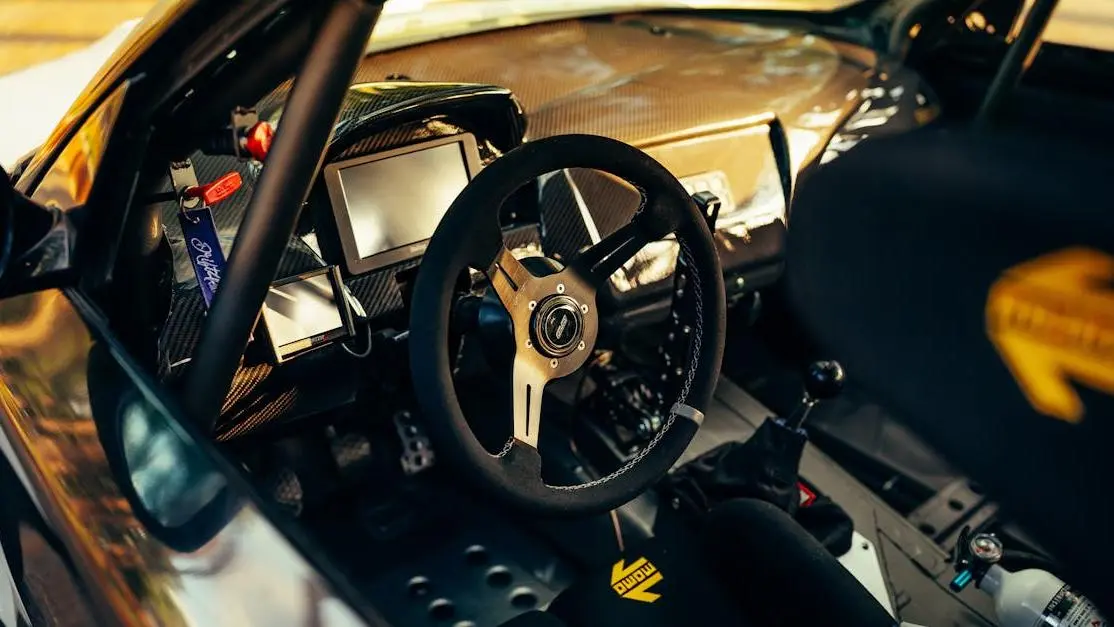
A race car steering wheel is a highly specialized control interface that gives drivers direct command over both steering and key car systems, like engine mapping, brake bias, and communication.
Today’s versions integrate carbon fiber construction for lightness and strength, feature quick-release hubs, and house an array of precision buttons and paddles designed for fast, accurate inputs.
For enthusiasts aiming to elevate performance and cockpit control, the right racing wheel maximizes feedback, grip, and customization—directly impacting how the car feels at the limit. High-end options echo the quality and integration seen in expertly-engineered carbon fiber components. Choose with intent, as every detail matters.
Understand the Role of a Race Car Steering Wheel in Performance
Every second counts when you’re chasing true performance. The race car steering wheel is your primary control interface. It’s not just about pointing the wheels; it’s about direct feedback, rapid adjustments, and driving at the edge.
Key reasons the steering wheel dominates race performance:
- Precise translation of hand input into sharp, real-time vehicle response. In racing, even a small miscue at the wheel can cost you a position, or worse.
- Complete command over critical race systems. Modern wheels put everything at your fingertips—engine maps, brake bias, radio, even DRS activation. No removing hands, no wasted moves.
- Designed for zero compromise. Every aspect matters: materials, rim shape, button placement, display technology. Each is selected to transmit fine detail, resist flex, and hold up to heavy loads.
- Vital for real-time strategy. Activating a pit-lane speed limiter, engaging DRS, or flagging events for data review—all from the wheel, without losing focus or rhythm.
FIA regulations recognize the importance of driver input and regularly inspect control electronics for timing, logic, and safety compliance. It’s not just hardware; it’s also about integrated electronics and reliable data signaling. We know the difference that tailored fitment and meticulous design can make. Crafting components that work in harmony with advanced systems is at the heart of our approach here at ASM Tuning, where we value performance, purpose, and integration. Every detail matters at the limit.
The right steering wheel is all about connection, control, and confidence at speed. It’s the difference between hoping for feedback and commanding it.
Trace the Evolution of Race Car Steering Wheels
Expectations have shifted. Wheels have evolved from basic control sticks into the nerve center of modern race cars. The steering wheel’s journey mirrors the relentless drive for lap time, safety, and ergonomic perfection.
Starting in the 1950s and 1960s, large-diameter wood or steel wheels offered raw leverage. That heavy setup helped with manual steering but punished hands in a crash. As aerodynamics and cockpit packaging improved, wheels shrank. The 1980s and 1990s saw the arrival of paddle shifters and smaller, more purposeful shapes—drivers gained speed and precision thanks to quick shifts without letting go.
The 2000s brought carbon fiber construction, integrated digital dashboards, and an explosion of programmable buttons and dials. Today, a pro racing wheel is a digital command module, custom-molded for each driver’s hand, engineered to save grams, and packed with programmable controls.
The push for tighter cockpits, safer extractions, and unseen electronic complexity shaped everything: D-shapes, flat tops, reinforced quick-release mounts. These innovations forced functional design into every square millimeter, and that’s a philosophy we share with our own carbon fiber body kits and aero upgrades at ASM Tuning. It’s always about less weight, more strength, greater confidence.
How evolution shaped the modern race steering wheel:
- Swapping wood and metal for carbon fiber reduces weight, lowers rotational inertia, and lets racers steer faster and longer without fatigue.
- Deep cockpit packaging and quick-release systems aid safety teams and save time in pit stops.
- High-density electronics connect every button and dial to real-time systems—gear changes, pit calls, energy deployment—so the driver commands more with less distraction.
Ergonomics, innovative materials, and integration separated winners from the rest. You see the same focus in high-end performance mods—less flex, lighter parts, and customization that unlocks your potential.
Identify the Key Features and Functions of Modern Race Car Steering Wheels
Take control. Today’s competition wheels place a full suite of vehicle controls no more than a finger’s reach away. The result is raw efficiency and direct responsiveness.
Essential Components for Race-Ready Control
- Shift paddles: Found behind the wheel, built for rapid gear changes without shifting your grip. Some teams install three rows for different duties—clutch, main shifting, and specialty strategies.
- Buttons and toggles: Engine mapping, pit speed limiter, DRS, differential settings, radio, and emergency calls. Every button acts as a shortcut to a critical adjustment.
- Rotaries and dials: Fine-tune brake bias, fuel mixtures, or adjust car balance lap by lap. These controls are easy to twist, even with gloves under high G.
- Integrated digital display: Records speed, live lap delta, warning messages, and even telemetry markers so the team can spot issues in post-race analysis.
No guesswork, no fluff. Competing teams generate thick manuals so drivers know their wheel’s logic inside out. Many buttons feel distinct; some offer raised edges or tactile features so mistakes are nearly impossible—even in the heat of a race.
Peak performance isn’t just about power, it’s about the right information and controls—right where you need them, right when you need them.
Smart Placement and User Experience
Drivers rely on memorizing button layouts, unique colors, and shapes. Pro teams tune button function for each driver and weather scenario. Tactile cues make split-second choices intuitive—so you change a differential setting without hunting around.
For weekend warriors, there’s a lesson: fast, effective controls reduce driver stress and save critical seconds. ASM Tuning’s products are built for this style of performance—fitment and usability, every time.
Analyze the Materials and Construction Choices in Race Car Steering Wheels
Racers demand materials that win. The ideal wheel needs to be stiff, light, and tough enough for pro-level force. Construction affects everything: feedback, durability, and comfort at speed or after hours on track.
Why Material Selection Matters
- Carbon fiber cores: High stiffness-to-weight ratio means minimal flex, clearer steering cues, and effortless micro-adjustments.
- Alcantara, suede, or microfibre: Grips stay tacky when hands sweat or conditions are damp. Soft enough for comfort, firm enough for feedback.
- Layered layups: Carbon or composite shells are bonded around a core, creating a light but impact-resistant structure. Precision in layup schedules ensures grip reliability and wheel rigidity.
With wiring and PCB boards often integrated into the rim, race wheels become complex assemblies. Engineers factor in heat, sweat, and harsh cockpit chemicals. High-end builds resist vibration and chemical wear, just as our aerodynamic carbon fiber kits sustain track abuse and daily use.
Wiring reliability matters. Strain-relieved connectors and mil-spec wiring lower the odds of an in-race failure.
Race-bred construction eliminates flex for feedback that’s fast, firm, and flawless.
Mechanical and Electrical Proof Points
- Targeted fiber orientation customizes flex, so every input translates instantly to the tires.
- Edge reinforcement protects sensitive internals from impact or clumsy glove handling.
That’s why choosing parts—steering wheel or aero kit—means paying for precision, not just flash.
Unpack How Ergonomics and Design Impact Control and Confidence
Controls are only as good as their fit. Proper ergonomics make you faster, more consistent, and less fatigued. The way a steering wheel fits and feels sets the tone for your drive.
A custom-molded grip supports fast reaction by reducing the need for constant micro-adjustment. Small diameter means you get sharper, lighter turns—helpful at speed, but potentially twitchy for daily use. D-shaped wheels and flat-bottoms maximize sightlines and fit in tight cockpits.
Drivers at the top level request unique grip shapes, finger contours, and button placements to match their hand size and seating. Specialized textures and tactile cues make operation second nature. Poor ergonomics can slow reaction, spike muscle fatigue, or create lapses in control.
How ergonomic features fit your goals:
- Shorter diameter aids rapid response for track-focused drivers that demand instant feedback.
- D-shaped or flat-top designs fit modern cockpits and help taller drivers clear knees.
- Custom grip contours keep you locked-in through long stints. Good ergonomics means fewer mistakes.
The right ergonomic choices bridge high-performance usability with comfort—every part working for you, not against you.
When you’re tuning your vehicle, think about how each component affects your rhythm behind the wheel. We design aero parts with the same philosophy: precise fit, minimized fatigue, maximized control.
Compare Race Car Steering Wheels to Aftermarket Options for Enthusiasts
Not every wheel qualifies as track-ready or street-safe. Choosing between motorsport, OEM, and aftermarket options means weighing real-world factors. The best wheels offer more than looks—they deliver confidence and proven performance.
Know the Differences
- Motorsports wheels: Carbon fiber construction, robust quick-release hubs, and sealed connectors built to handle high G-forces and electrical noise. Ideal for dedicated track cars.
- Aftermarket “race-inspired” wheels: Offer upgrades like Alcantara grips and D-shapes, but may skip rigorous testing or structural reinforcement. Pick these for casual track days or car shows—never sacrifice security for style.
- OEM wheels: Maintain airbag integration and factory electronics, making them safer for daily drivers. Upgrades here are often limited by compatibility and regulations.
Some features, like LED shift lights or external displays, shine on a time attack lap but distract or complicate things on the street. Quick-release hubs, common in professional racing, may disrupt safety systems like airbags and steering locks in road cars.
What to avoid:
- Cheap wheels with no documented strength testing or unclear fitment data. These can introduce play, cause electrical gremlins, and hurt drivability.
- Installing a wheel that removes required safety devices, like airbags, in a region where it’s illegal or affects insurance.
Functional upgrades win hands down. Choose quality over aesthetics and never cut corners when it comes to control.
Reveal the Impact of a Race Car Steering Wheel on Driver Feedback and Performance
Your steering wheel turns driving into an immersive, responsive experience. When it transmits precise feedback, you sense tire grip, chassis flex, and track details instantly. Performance-optimized wheels let you respond faster, commit harder, and hit lap after lap with consistency.
Tight construction and the right materials protect the integrity of that feedback. Carbon-fiber builds reduce rotational mass, making every input sharp. High-quality grips preserve feel, even as the heat and time add up. The result: You build confidence in the car’s reactions, trusting the information transmitted through your hands.
This attention to feedback sits at the core of our approach with every performance part we design at ASM Tuning. Our carbon fiber kits are sculpted for strength and minimal flex, echoing how the best steering wheels boost responsiveness without compromise.
How a true race steering wheel makes a difference:
- Sharper turn-in and better mid-corner adjustment improves lap times and agility.
- Consistent grip and quick return-to-center reduces overcorrection and fights fatigue.
- Pro-grade feedback increases confidence at the limit and helps you extract every ounce from your chassis and tires.
Performance is about trust—you want every part working for you, not undermining your confidence with vague or unpredictable response.
Offer Practical Guidance for Choosing and Installing a Race Car Steering Wheel
Ready to upgrade? Get tactical. Picking the right steering wheel and installing it correctly sets the stage for everything that follows. Skipping steps or rushing can cost you performance—or worse, compromise safety.
Action Steps for Smart Selection
- Decide your primary use: Track, show, daily, or a hybrid role.
- Choose diameter, dish, and grip style based on hand size, seat position, and driving goals. Small diameter for response, deeper dish for leverage—know your priorities.
- Confirm vehicle compatibility: Check hub adapters, spline pattern, electronic controls, and legal needs (airbag retention for street).
- Pay for tested quality and solid warranties. If unsure, demand supplier documentation.
Always opt for professional installation. Even minor mistakes in hub alignment or wiring can cause faults or steering play. After the upgrade, test everything: steering angle, electronics, and any retained safety systems.
Discipline in fitment and prep transforms a simple mod into a full system upgrade. Every part—wheel, pedals, seat—should work seamlessly.
For the best results, coordinate your steering wheel with other cockpit upgrades. Choose performance seats, pedal sets, or shifters that fit your reach and driving style. That’s how you build a cockpit that fits you like a glove and never leaves you guessing.
Learn How Race Car Steering Wheels Are Developed, Tested, and Used in Professional Motorsports
Elite steering wheels don’t happen by accident. Pro teams spend countless hours refining designs in partnership with drivers, using every advantage allowed by regulations.
Engineers start with CAD models and electrical schematics. Prototypes see mechanical stress, thermal extremes, and repetitive cycle loads that simulate a full racing season. In F1 and endurance racing, all electronics must pass strict inspections, with certain components requiring complete design disclosure. No secrets, no shortcuts.
Customization rules the process. Each driver requests fine-tuned panel contours, grip shapes, and even tactile button feedback. Teams iterate, tuning electronics and mechanicals over simulator and track sessions.
Many technologies—like multi-tier paddles, quick-release hubs, or custom digital displays—migrate from pro racing to high-end enthusiast upgrades. It’s the same process we channel for our ASM Tuning carbon fiber and gloss black kits: start with rigorous design, test to extremes, then launch what truly works.
Pro testing weeds out weak points, leaving only what delivers measurable gains.
Address Common Myths and Concerns About Race Car Steering Wheels
Let’s clear the air. Not all steering wheel swaps deliver results. Some may introduce new problems or run afoul of the law.
- Smaller wheels or flat-bottom designs alone won’t make you a pro. The layout, rigidity, and integration matter as much as shape.
- Ignoring airbag requirements or safety certifications can cost you at inspection—or void insurance.
- True gains come from full system thinking: fitment, comfort, integration with seats and pedals, and tested quality.
Low-quality wheels might look sharp at first, but cheap materials or poor fitment erode control and trust. Always select products backed by warranties and real-world testing.
Support matters too. Detailed fitment guides, wiring diagrams, and customer help—like we offer at ASM Tuning—keep you protected from hassle, mistakes, or safety risks down the road.
Skip the hype, focus on quality, reliability, and expert support. That’s how you get confidence and control.
Conclusion: Embrace Purpose-Built Performance for Driving Enjoyment
Focus on what matters most. Integrate each upgrade thoughtfully—the right race car steering wheel brings clarity, confidence, and sharper performance.
Prioritize functional materials, proven designs, and fitment support. Work with experts who understand track-proven solutions and back their parts with real guidance and warranties. That’s how you maximize your gains and create a cockpit built around your goals.
You want every mile to deliver more passion, more connection, and more results. That’s the experience we build at ASM Tuning—precision aero, guaranteed fitment, and relentless focus on the needs of true automotive enthusiasts.
